
Most people file dry mouth under “annoying but harmless” - right next to chapped lips and a scratchy throat. Drink some water, wait it out, move on.
That instinct is wrong, and it’s costing people their teeth.
Dry mouth, clinically, xerostomia, isn’t a comfort problem. It’s a protection problem. Saliva is the single most underrated thing keeping your mouth healthy, and when it dries up, the damage that follows is fast, expensive, and often permanent.
Saliva is your mouth’s defense system
We tend to think of saliva as just… wet. But it’s a chemically active fluid doing several protective jobs at once, all day and all night, without you noticing.
According to the American Dental Association, saliva cleanses the mouth, helps you speak and swallow, shields your teeth and soft tissue from physical and microbial damage, and holds your mouth at a neutral pH. When salivary flow drops, the ADA notes it raises the risk of dental caries, enamel demineralization, tooth sensitivity, and mucosal infections.
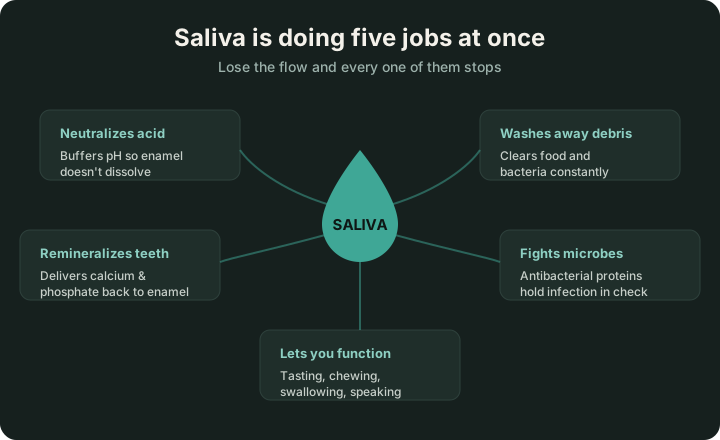
One periodontology researcher put the stakes bluntly: Boston University’s Frank Oppenheim has said that if saliva were just water, we’d have dissolved our teeth down to little stumps by age 20. That’s not hyperbole. Saliva is actively repairing microscopic acid damage every single day. Take it away and the repairs stop.
What actually goes wrong when your mouth dries out
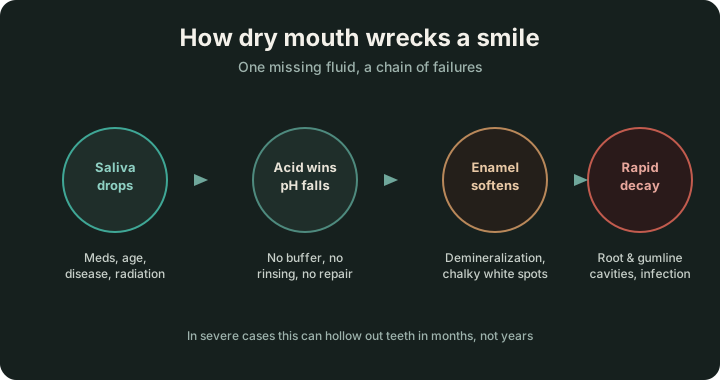
Dry mouth doesn’t cause one problem. It removes a defense, and then a cascade follows.
Acid takes over. Without saliva buffering your mouth back to neutral, pH stays low after everything you eat and drink. Low pH dissolves enamel - that’s the whole mechanism behind cavities.
Enamel starts to demineralize. Clinicians describe the early warning sign as chalky white spots appearing at the necks of teeth. That’s mineral leaving the enamel faster than it can come back.
Decay goes rapid - and hits unusual places. This is the part that surprises people. Xerostomia-driven cavities tend to appear right at the gumline and on exposed root surfaces, and they can be aggressive. Clinical descriptions of severe, permanent dry mouth call the resulting decay rapid and particularly devastating. Restorations fail sooner, too - the research on dental treatment outcomes consistently shows higher failure and recurrent-cavity rates in dry-mouth patients.
Infections move in. Saliva keeps microbes in check. Without it, fungal infections like oral candidiasis (thrush) become far more common, along with a sticky, stringy, uncomfortable mouth that makes eating and speaking genuinely hard.
It’s more common than you’d think - and you might not know you have it
Here’s the trap: dry mouth is enormously widespread and badly under-recognized. The ADA notes prevalence estimates ranging anywhere from under 1% to nearly 65% of the population depending on how it’s measured and which group is studied. Whatever the exact number, it’s a lot of people - and many have no idea their tooth trouble traces back to a dry mouth.
The usual culprits:
- Medications. This is the big one. Hundreds of common drugs list dry mouth as a side effect - antidepressants, antihistamines, blood-pressure meds, diuretics, decongestants, pain relievers, and many more. More than 500 medications are known to cause it, which is why older adults, who tend to take more of them, are hit hardest.
- Aging plus medication is a compounding problem: gums recede with age, exposing root surfaces, right as the medication load goes up.
- Medical treatment. Radiation to the head and neck and chemotherapy can damage salivary glands, sometimes permanently.
- Autoimmune and chronic disease. Sjögren’s syndrome and diabetes are classic causes.
- Lifestyle and habit. Dehydration, heavy coffee, smoking, mouth breathing, and snoring all dry things out.
If you’re on a daily medication and your mouth feels persistently dry or sticky, that’s not a coincidence to ignore - it’s a signal to act.
The fixes: keep it moist, keep it protected
The good news is that managing dry mouth is mostly about consistency, not heroics. The goal is simple - keep the mouth lubricated and keep acid in check - and the right product depends on the moment you’re trying to cover.
A quick, honest note on one popular ingredient: xylitol. Many dry-mouth products use it, and there’s a reasonable rationale - xylitol isn’t fermented into acid by cavity-causing bacteria, and it can help stimulate saliva flow. The clinical evidence for xylitol as a standalone cavity-fighter is genuinely mixed (the 2015 Cochrane review rated it weak and called for better studies), so think of it as a helpful add-on, not a replacement for fluoride and good habits. The moisture these products provide is the real win for a dry mouth.
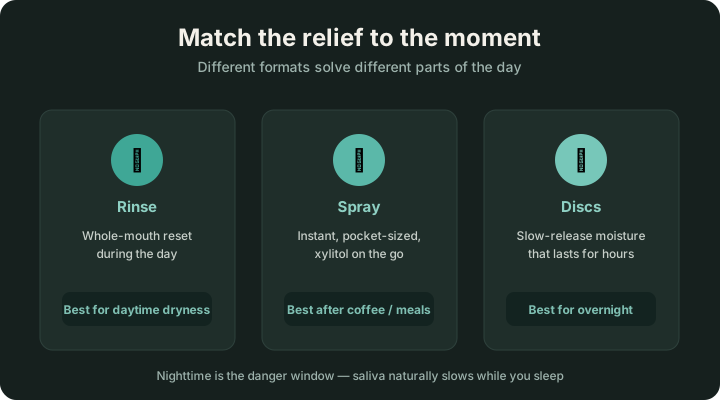
Here’s how to think about the toolkit:
For daytime relief: a rinse
A dedicated dry-mouth rinse soothes and re-moisturizes the whole mouth in one pass, and it’s safe to use as often as you need. Biotene Dry Mouth Oral Rinse is the mid-range workhorse here - a swish whenever things start feeling dry gets everything back to feeling normal. Good as a reset a few times through the day.
For on-the-go moments: a spray
The problem with dryness is that it flares at inconvenient times - mid-meeting, after that second coffee, before a meal. A pocket spray fixes exactly that. Allday Dry Mouth Spray delivers instant moisture in two or three pumps, with a high-strength xylitol formula, so you can hit the dryness the second it shows up instead of waiting until you’re near a sink.
For overnight - the danger zone: slow-release discs
This is the one people miss. Saliva flow naturally slows way down while you sleep, which makes the overnight hours the single riskiest window for dry-mouth damage. A rinse before bed won’t last till morning. XyliMelts Dry Mouth Discs are built for exactly this: you stick one to your upper gum at bedtime and it slowly releases moisture as it dissolves overnight, so you wake up without that parched, sticky feeling - and without your enamel sitting unprotected in an acidic mouth for eight hours.
Used together, those three cover the full day: rinse to reset, spray to patch the gaps, discs to guard the night.
The takeaway
Dry mouth earns its “dangers” billing. It’s not the discomfort that should worry you - it’s what the missing saliva stops doing: no acid buffering, no debris clearing, no remineralizing, no microbial defense. That’s how a “minor annoyance” turns into rapid, gumline-hugging decay.
The move is simple: don’t tough it out. Keep your mouth moist around the clock - a rinse by day, a spray on the go, discs overnight - and if the dryness is persistent, mention it to your dentist and check whether a medication is the cause. Your saliva was protecting your teeth every minute of every day. When it can’t, it’s on you to fill in , and the tools to do it are cheap, easy, and a lot less painful than the alternative.
Sources
- American Dental Association, Oral Health Topics - Xerostomia - saliva’s protective functions and the risks of reduced flow.
- Plemons JM, Al-Hashimi I, Marek CL, et al. Managing xerostomia and salivary gland hypofunction, Journal of the American Dental Association, 2014: clinical signs, cervical/incisal caries, demineralization.
- Impact of Xerostomia on dental treatment outcomes: a systematic review, PMC, 2025: reduced restoration longevity and higher recurrent-caries rates.
- Xerostomia: Diagnosis and Management, CancerNetwork: dry, sticky mucosa; rapid, devastating caries in severe permanent xerostomia.
- Colgate Professional: Medication-induced xerostomia and caries risk - prevalence estimates, medication causes, and the Frank Oppenheim quote.
- CDHO: Xerostomia fact sheet, 500+ medications, root caries, and risk in older adults.
- Riley P, et al. Xylitol-containing products for preventing dental caries in children and adults, Cochrane Database of Systematic Reviews, 2015: weak evidence; effects likely via saliva stimulation and sugar substitution.
This article is for general educational purposes and isn’t a substitute for personalized advice from your dentist.