
Here’s the uncomfortable truth most people never hear at the dentist: the biggest threat to your smile might not be that you’re brushing too little. It’s that you’re brushing too hard.
We’re taught to equate effort with cleanliness. Scrub harder, scrub longer, really get in there. But plaque isn’t baked-on grime - it’s a soft, sticky film that wipes away with almost no pressure at all. Everything past that point isn’t cleaning. It’s sanding.
And your teeth and gums are keeping score.
What actually happens when you press too hard
Aggressive brushing does two kinds of damage, and both are slow enough that you won’t notice until it’s done.
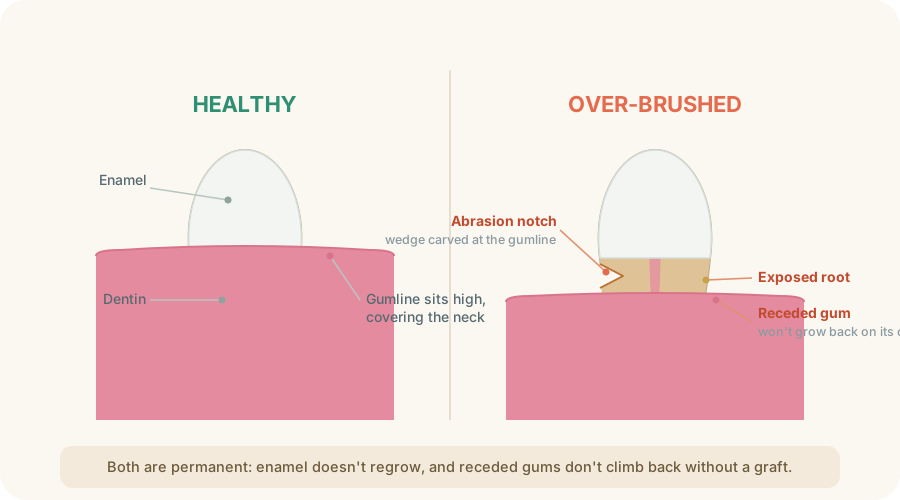
It wears away your teeth. The mechanical friction of stiff bristles and heavy pressure - especially paired with an abrasive toothpaste - grinds a wedge-shaped notch into the tooth right at the gumline. Dentists call this cervical abrasion. It starts in the enamel, then reaches the softer dentin underneath, and in severe cases marches all the way toward the nerve. A 2025 narrative review in Healthcare notes these abrasive lesions are common enough to affect well over half the population, and once the notch is cut, the tooth doesn’t grow it back.
It wears away your gums. Gum tissue is far softer than enamel, so it gives first. Constant forceful scrubbing irritates and inflames the gumline until the tissue pulls back - gingival recession - exposing the root surface underneath. That root has no enamel to protect it, so it abrades even faster than the crown, and it’s a lot more sensitive.
The kicker: receding gums don’t come back on their own. Fixing significant recession usually means a gum graft - surgery. This is one of the few dental problems that’s genuinely easier to prevent than to repair.
The evidence isn’t subtle
This isn’t folk wisdom. The relationship between brushing force and damage shows up cleanly in the clinical literature.
The same 2025 Healthcare review summarizes studies measuring exactly how much force separates healthy mouths from damaged ones, and the margins are razor-thin:
- No recession was associated with brushing forces around 2.1 N.
- Minor recession showed up around 2.4 N.
- Severe recession correlated with forces of about 3.8 N.
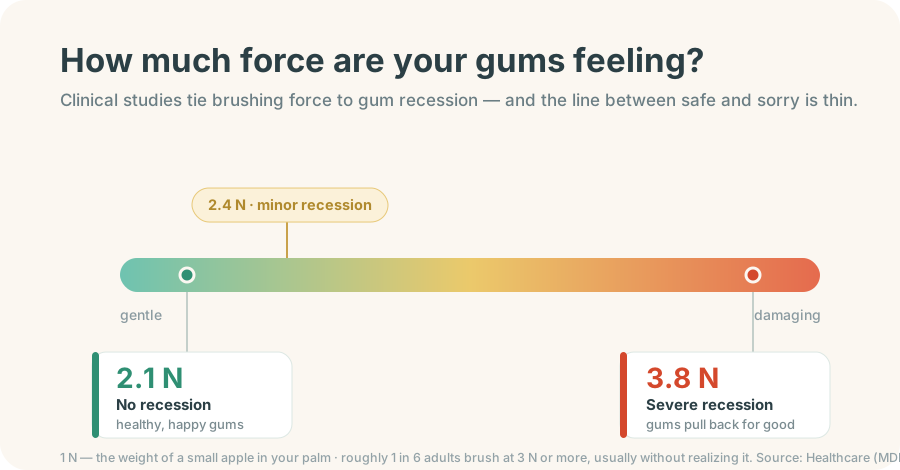
To put that in perspective, 1 newton is roughly the weight of a small apple resting in your palm. The difference between gums that stay put and gums that retreat is a matter of a couple of apples’ worth of pressure - and the review found that a meaningful share of adults (roughly one in six) routinely brush at 3 N or more. Most of them have no idea they’re doing it.
A 2025 systematic review in the Journal of Pioneering Medical Sciences reached the same conclusion from the other direction: across the studies it analyzed, aggressive brushing - particularly with hard bristles and abrasive toothpaste , was consistently linked to a higher risk of cervical abrasion. The technique matters too. The instinctive back-and-forth “sawing” motion is one of the worst offenders for carving those gumline notches.
It’s worth being precise here, because good science is honest about its limits: researchers like Litonjua and colleagues (International Dental Journal, 2003) have pointed out that brushing isn’t the only cause of recession - genetics, tooth alignment, and grinding all play a role. But across the board, the message is the same. Heavy-handed brushing is a well-established, entirely avoidable risk factor. Why gamble on the one variable you fully control?
What dentists actually recommend
Ask the American Dental Association and the guidance is refreshingly blunt. On brushes, their advice is to “go soft”: the ADA warns that firm or even medium bristles may damage your gums and enamel, and says you should brush only hard enough to clear the film off your teeth, letting your fluoride toothpaste do the rest.
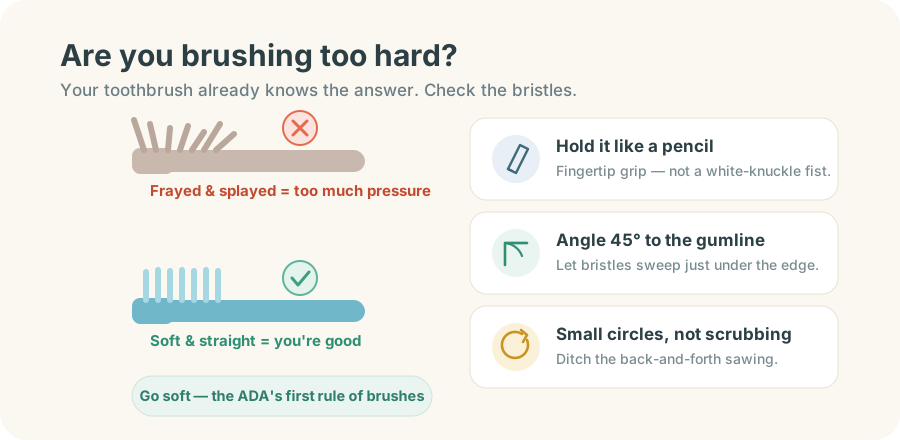
There’s a simple self-test, courtesy of Delta Dental: if you’re bending or splaying the bristles as you brush, you’re pressing too hard. A brush that frays flat within a few weeks is a confession, not a coincidence.
The fixes are easy:
- Switch to a soft (or extra-soft) bristled brush. This is the single highest-leverage change most people can make.
- Hold it like a pencil, not a fist. Gripping with your fingertips makes it physically harder to bear down.
- Ditch the scrub. Angle the bristles about 45° toward the gumline and use small, gentle circles instead of long horizontal strokes.
- Give it time, not force. Two minutes, twice a day. Technique and consistency beat pressure every time.
- Replace it every 3–4 months: or sooner if it looks worn out.
Why soft bristles win
The fear people have is that a gentler brush will leave their teeth dirty. It won’t. Plaque is soft; you don’t need to attack it. What soft bristles buy you is a margin of safety: they flex against the tooth and gumline instead of digging into it, so they clean the film without machining your enamel or bullying your gums. That’s precisely why the ADA and, in practice, nearly every clinician steer patients toward soft over medium or hard.
If you have any sensitivity, visible recession, or exposed roots already, this isn’t optional - it’s the whole ballgame.
Where CocoBrush fits in
If you’re going soft, it’s worth going properly soft - and that’s the case CocoBrush makes for itself. It’s a dentist-designed, ultra-soft manual brush built by dentist Dr. Chrystle Cu (the same team behind Cocofloss), packing thousands of multi-density bristles that the company says are meaningfully finer than a standard brush’s.
The design intent lines up with everything above: tall, tapered bristles to reach along the gumline and between teeth, shorter rounded ones to polish, and a compact angled head for the spots people tend to bear down on when they can’t quite reach. Cocolab points to a Swiss university study behind its headline claim that the brush is up to 16x more effective at cleaning between teeth than a standard one. (That figure is the brand’s own - worth knowing as a marketing claim rather than an independent clinical verdict - but the underlying principle, that a fine, soft, well-designed bristle cleans effectively without the abrasion, is exactly what the research supports.) As a bonus, the handle’s made from recycled ocean-bound plastic, which is a nice thing to feel good about twice a day.
The point isn’t the brand name. It’s the philosophy: powerful and gentle aren’t opposites. The best clean is the one that gets your teeth spotless and leaves your enamel and gums exactly where you found them.
The takeaway
Brushing harder was never the answer - it was the problem hiding in plain sight. Ease off the pressure, pick up a soft brush, let technique do the work, and you’ll protect the two things you can’t buy back at any price: your enamel and your gumline.
Your future self, and your dentist, will thank you.
Sources
- The Impact of Toothbrushing on Oral Health, Gingival Recession, and Tooth Wear - A Narrative Review, Healthcare (MDPI), 2025: brushing-force measurements and abrasion/recession prevalence.
- Systematic Review on Toothbrushing and Cervical Abrasion, Journal of Pioneering Medical Sciences, 2025: aggressive brushing, hard bristles, and abrasive dentifrice as risk factors.
- Litonjua LA, Andreana S, Bush PJ, Cohen RE. Toothbrushing and gingival recession, International Dental Journal, 2003.
- Addy M, Hunter ML. Can tooth brushing damage your health? Effects on oral and dental tissues, International Dental Journal, 2003.
- American Dental Association, MouthHealthy - toothbrush selection and brushing guidance.
- Delta Dental: “Overbrushing: too much of a good thing.”
- Cocolab / CocoBrush product information (brand claims).
This article is for general educational purposes and isn’t a substitute for personalized advice from your dentist.