
Stand in the oral-care aisle for thirty seconds and you’ll see the problem: a wall of brushes, a shelf of floss, a row of toothpastes, every one of them promising to be the best. They can’t all be right - and the truth is that none of them is best for everyone.
There’s no universal winner, because there’s no universal mouth. The floss that’s perfect for tight, healthy teeth is the wrong tool for someone with receding gums. The toothpaste that rescues sensitive teeth is a waste on someone who needs cavity protection. The brush that finally fixes a heavy-handed scrubber is overkill for someone who already brushes gently.
The product isn’t good or bad in a vacuum. It’s a match - or a mismatch - for the specific mouth using it. And the person best positioned to make that match is the one who examines your mouth twice a year.
Why “best-rated” isn’t “best for you”
A five-star rating is an average across thousands of strangers’ mouths. Yours isn’t in that average. Reviews can tell you a product works for someone - they can’t tell you it works for you, because they know nothing about your gum line, your enamel, or the gaps between your teeth.
Your hygienist does. At every cleaning they’re reading the exact variables that decide which product fits:
- Recession and exposed roots: which teeth need a gentler tool and a desensitizing paste.
- Enamel wear and abrasion notches: the tell-tale sign your current brush or paste is too aggressive.
- Spacing and contact tightness: the real reason your floss shreds, snaps, or won’t fit.
- Bleeding points and gum inflammation: where your current routine is missing.
- Restorations, appliances, and dry mouth: all of which change what belongs in your bathroom.
None of that is printed on a box. It’s the whole reason the appointment exists - and it’s why “ask your hygienist” beats “read the reviews” every time.
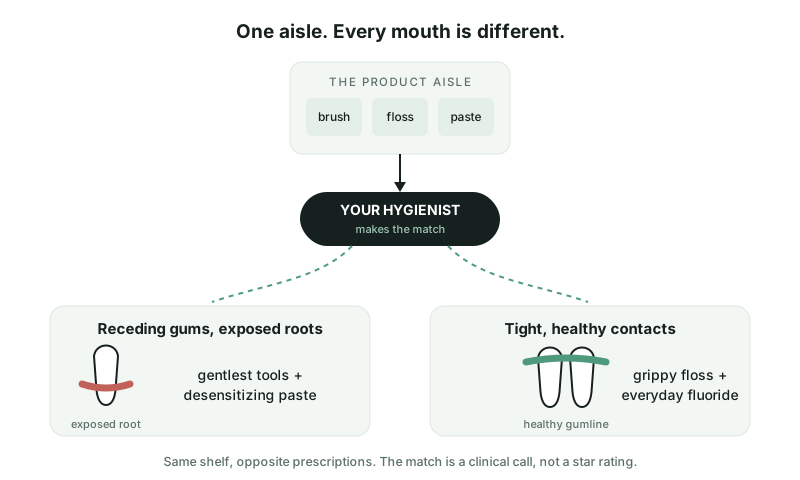
Below are three categories where the “best” product flips completely depending on the mouth. Two picks each - same job, different patient.
Floss: grip vs. glide
Flossing daily matters far more than which floss you use - but which floss is often the difference between a habit that sticks and one you quietly abandon. The right pick comes down to what your teeth are doing to the floss.
If your contacts are healthy and tight: textured floss
For most healthy mouths, the enemy is plaque that clings, and a textured floss grabs far more of it than a slick strand. Coco Floss is woven from hundreds of filaments that work like a microfiber cloth, hugging the tooth and lifting plaque a smooth floss slides right past. If your floss “feels clean” only when it has some grab to it, this is your floss.
If your floss shreds or won’t fit: glide floss
Now flip the mouth. If your contacts are so tight that floss frays, catches, or snaps - one of the most common reasons people give up flossing - a textured floss makes it worse. A smooth PTFE floss like Oral-B Glide Pro-Health slips through the tightest gaps without shredding, so the floss survives the trip and you actually finish the job.
And if you have a bridge or braces: neither
Both of the above assume floss can get where it needs to go. Around a bridge or under fixed appliances, it can’t - you need Oral-B Superfloss, with its stiffened threader end and spongy middle, to reach underneath. (For implants and bridges specifically, a water flosser is often the better tool - we covered exactly that here.)
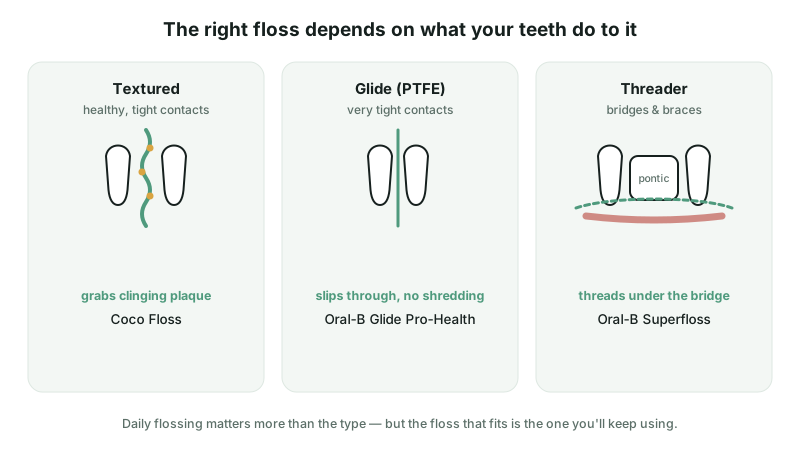
The ADA’s own guidance lands here too: waxed, unwaxed, textured, threaded - the type matters less than doing it, and if your teeth are tight, a floss that fits is the one you’ll keep using.
Toothbrushes: gentle-by-design vs. gentle-by-force
We’ve written before about how brushing too hard quietly wrecks enamel and gums - and that nearly everyone should be on soft bristles. But “soft” isn’t one-size-fits-all either. The right brush depends on why you need the gentleness.
If you have recession or sensitivity: the softest possible bristle
When roots are already exposed and gums have receded, every brushing stroke is landing on vulnerable tissue with no enamel to protect it. This is the case for the gentlest bristle you can find. The Nimbus Toothbrush uses ultra-fine, tapered bristles designed specifically to clean along a receded gumline without abrading the exposed root - gentle by design, so the tool itself can’t do damage even on a bad day.
If you can’t stop pressing hard: let the brush enforce it
Some people know they brush too hard and can’t feel when to stop. Willpower isn’t the fix here - feedback is. An electric brush with a pressure sensor, like the Philips Sonicare Series 5700, alerts you the moment you bear down, retraining the habit in real time. It also does the scrubbing motion for you, which removes the temptation to muscle through. Gentle by force - the brush simply won’t let you press too hard.
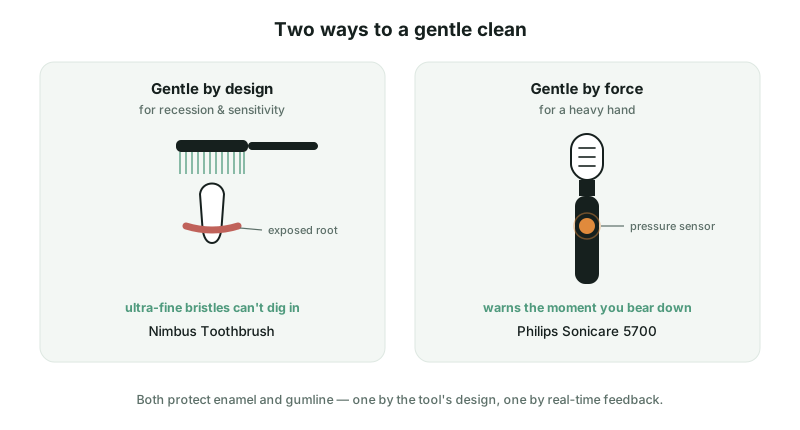
Both protect the same two things you can’t buy back - enamel and gumline - they just get there differently. Which one fits you depends on whether your problem is fragile tissue or a heavy hand, and that’s exactly the call your hygienist can make on sight.
Toothpaste: read the active ingredient, not the flavor
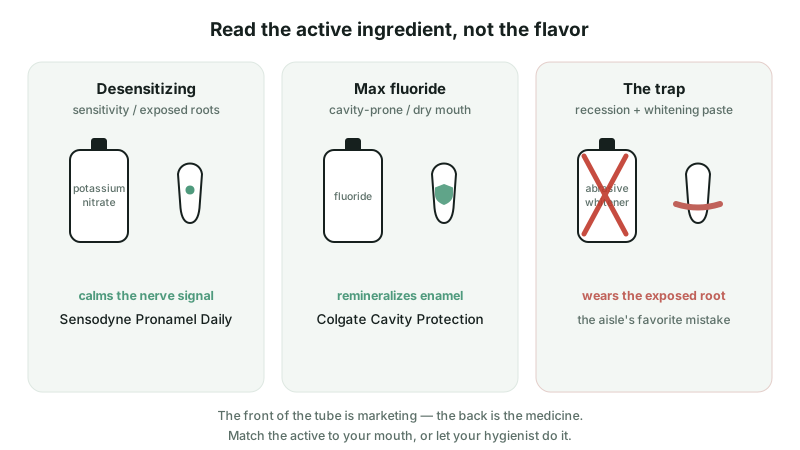
Toothpaste is where the aisle misleads people most, because the marketing on the front of the tube (“whitening!”, “fresh!”) has almost nothing to do with the ingredient that actually matches your mouth. Flip it over and read the active - that’s the part that’s working.
If you have sensitivity or exposed roots: a desensitizing paste
Sensitivity means the nerve inside the tooth is getting the message from the outside world - usually through exposed dentin where gums have receded. A paste built around this, like Sensodyne Pronamel Daily, works to calm that nerve signal and protect softened enamel, so cold, heat, and sweet stop making you wince. Anyone with recession should look here first.
If you’re cavity-prone or have dry mouth: maximum fluoride protection
For a mouth fighting decay - or one running dry, where saliva isn’t buffering acid the way it should , the priority isn’t calming nerves, it’s remineralizing enamel. A straightforward, high-strength fluoride paste like Colgate Cavity Protection does exactly that job without unnecessary abrasives. The unglamorous fluoride tube is the right pick far more often than the whitening one.
The mismatch to avoid
Here’s the trap the aisle sets: someone with recession sees the exposed root looking dull and yellow and reaches for a whitening paste to fix it - the single worst choice. Whitening pastes tend to be more abrasive, and that exposed root has no enamel armor, so it wears faster and hurts more. The label promised a brighter smile; the mouth needed the opposite. A hygienist catches that mismatch instantly.
Bring the aisle to the chair
The fix for all of this is almost embarrassingly simple: stop guessing in the store and ask at your next cleaning. Bring the brush and paste you’re using now, describe what actually bothers you - bleeding, sensitivity, floss that won’t fit, a mouth that’s always dry - and let your hygienist match products to what they can see in your mouth.
It costs nothing, it takes two minutes, and it saves you from a bathroom drawer full of “best” products that were never the best for you.
The takeaway
There’s no best toothbrush, no best floss, no best toothpaste - only the best one for the mouth in question. Grip floss or glide floss, gentle-by-design or gentle-by-force, desensitizing paste or maximum fluoride: each pair does the same job for a completely different patient. Bestseller lists are built for a mouth that doesn’t exist. Yours is specific - so get the recommendation from the person who actually examines it.
Ask your hygienist at your next visit. It’s the shortest path to a routine that fits.
Sources
- American Dental Association, MouthHealthy - toothbrush selection (“go soft”) and flossing guidance (type matters less than consistency).
- Delta Dental: Choosing toothpaste, floss and mouthwash - matching product features to individual needs; reading active ingredients.
- The Impact of Toothbrushing on Oral Health, Gingival Recession, and Tooth Wear - A Narrative Review, Healthcare (MDPI), 2025: brushing force, abrasion, and the case for soft bristles.
- Plemons JM, Al-Hashimi I, Marek CL, et al. Managing xerostomia and salivary gland hypofunction, Journal of the American Dental Association, 2014: dry-mouth caries risk and the case for fluoride.
- Manufacturer product information (Cocofloss, Oral-B, Nimbus, Philips Sonicare, Sensodyne, Colgate) - formulation and design claims.
This article is for general educational purposes and isn’t a substitute for personalized advice from your dentist or hygienist.